Japanese karesansui
Explore a Japanese dry landscape garden interpretation through stone grouping, raked gravel and open space. Adapt the composition with a reusable prompt.
Make
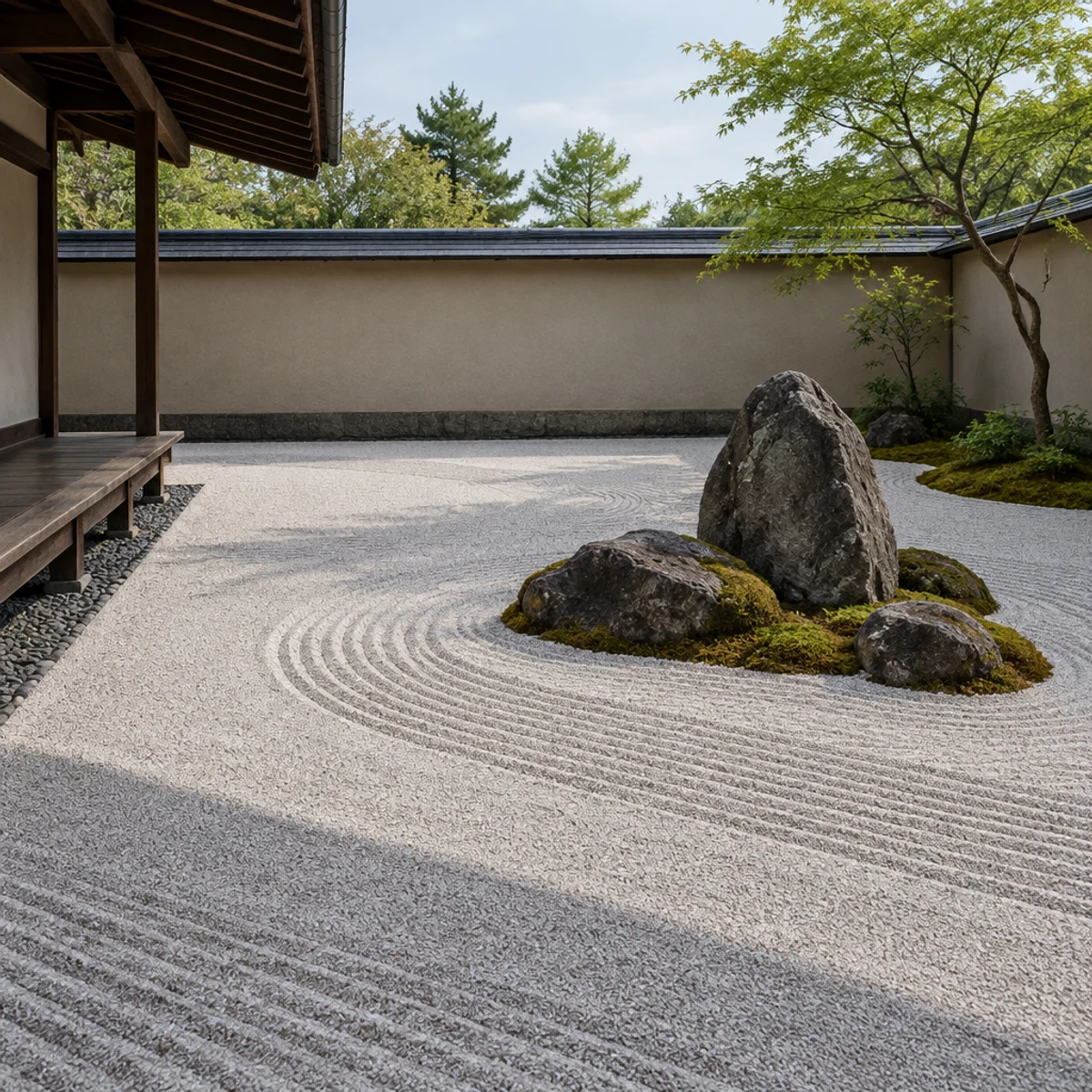
Japanese karesansui dry landscape garden with raked gravel fields, carefully grouped stones, and restrained asymmetrical enclosure; sparse plantings, asymmetrical balance, and meditative voids.
A starting point: add your own subject or details in your image tool.
An original generated example of this visual direction.
Automated image review only; results vary by image tool.
About this aesthetic and its examples
Compare more directions
Explore other approaches for this kind of project.
Look closer: traits and nearby styles →
About this example
This image may have used extra directions. The seed above is a reusable starting point and may produce a different result.
- Created with
- OpenAI Image API
- Model
- gpt-image-2.5-flare
- Generated
- 2026-10-18
View model alternatives · Compare results →
How to use this promptRead as Markdown
Design the relationship between stones and space
Begin with the dry garden’s occupied and open areas. The AI example offers a composition to examine; the linked Japan House garden provides a documented reference.
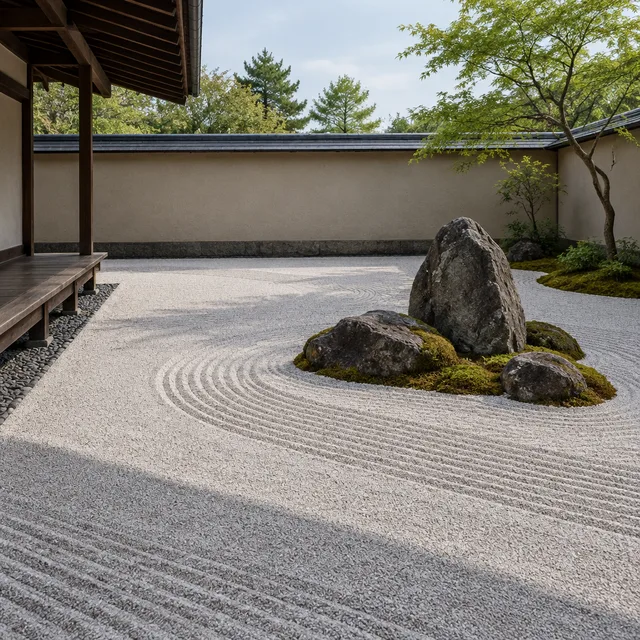
Stone group and gravel field
Compare the clustered stones with the broad empty gravel area. Notice how the rake lines turn around the group.
Explore example →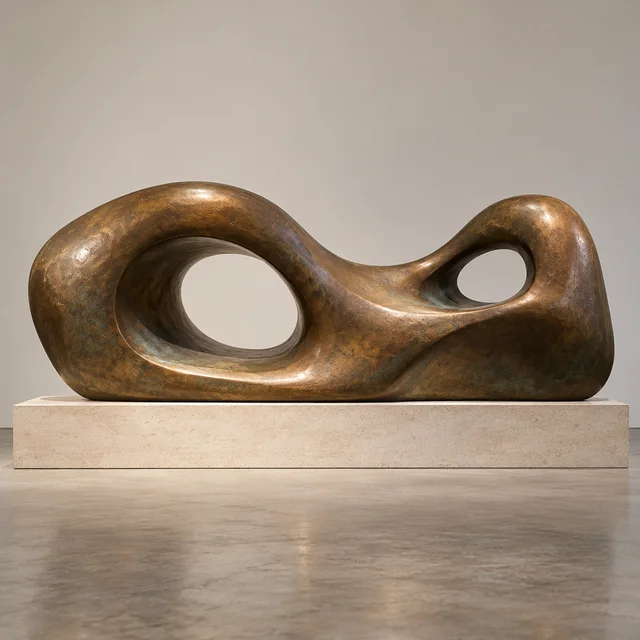
Compare an opening within a solid form
The sculpture puts open space inside the object. The garden distributes open space around its stones; these are different ways to explore solid and void.
Explore example →Try one change
Try three compositions with the same materials: a compact off-center stone group, more distance between the stones, and a lower viewpoint. Compare the amount of open ground. These are design experiments, not named traditional garden types or construction plans.
A landscape suggested through stones and open ground
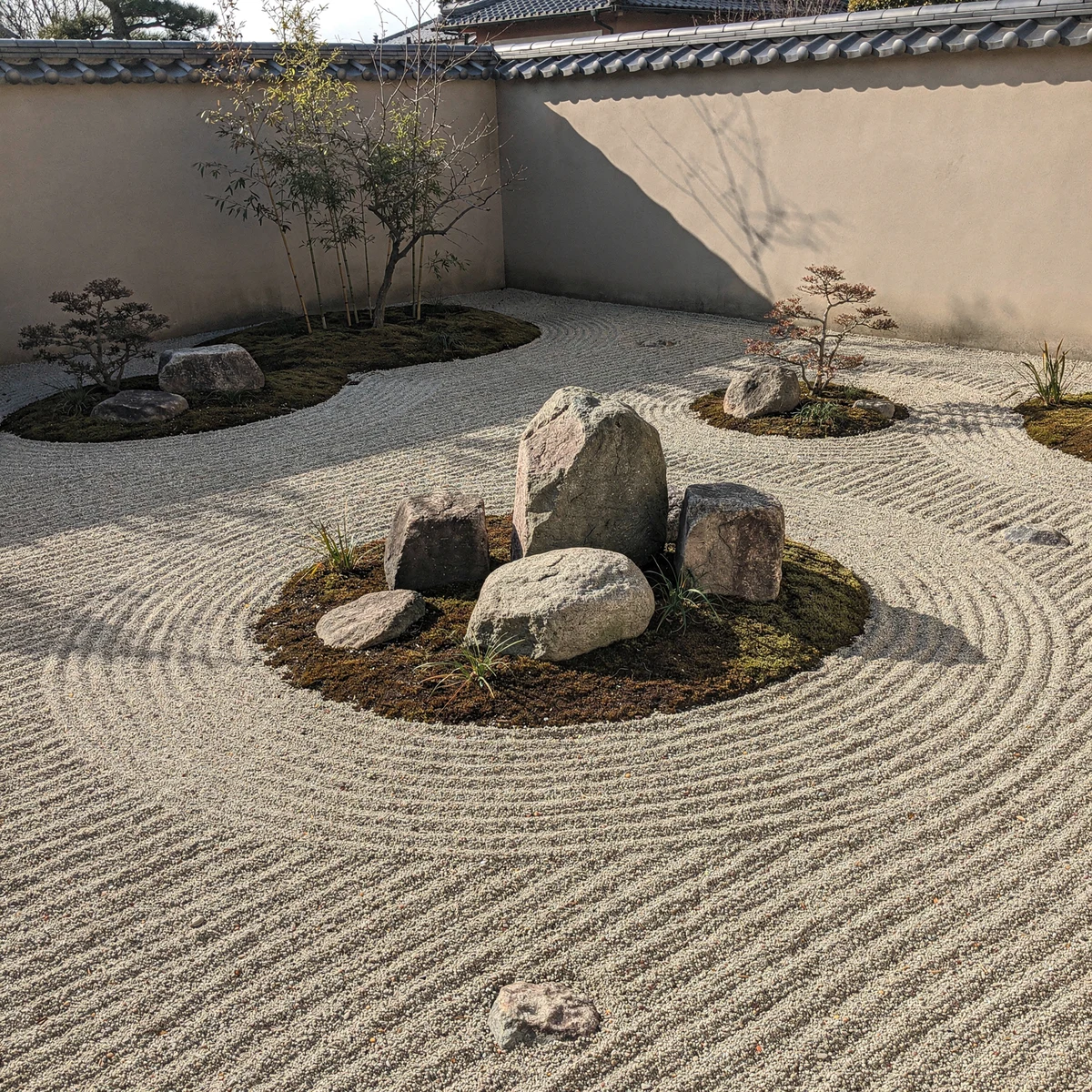
Karesansui is a Japanese dry landscape garden tradition. Stones, gravel or sand, and sometimes plants suggest a landscape without a pond or stream. Look at the arrangement of solid forms and open ground, rather than treating every stone as a symbol with one fixed meaning.
In this generated courtyard, a moss-edged stone group sits to the right of a broad gravel field. Curving rake lines wrap around the group, while the wall and veranda frame the view. Compare the narrow gaps between stones with the larger open area to their left.
For an AI exploration, change one relationship at a time: move the stone group farther from the center, simplify the surrounding planting or lower the viewpoint toward veranda height. Ask how each change affects the balance of occupied and open space. Follow the source to learn from an actual garden alongside this invented interpretation.
This is a generated garden concept, not a photograph of a historical site or a verified garden plan. Its appearance does not establish a religious meaning, construction method, drainage, accessibility or suitability for your climate.
Learn more: Japan House, University of Illinois: the dry garden
Look closer at Japanese karesansui
Explore a Japanese dry landscape garden interpretation through stone grouping, raked gravel and open space. Adapt the composition with a reusable prompt.
In the original generated example: A dry Japanese garden with raked gravel and grouped stones. Notice which details catch your eye before deciding whether the whole style is for you.
Ask yourself: is it the palette, the surface, the shapes, or the subject you like? Save a favorite and use the visual taste guide to find a useful next direction.
One aesthetic · Different interpretations
Japanese karesansui
Raked gravel, rock placement and spatial restraint.
Each image uses the same example prompt. Compare the details you’d carry into your own image.