
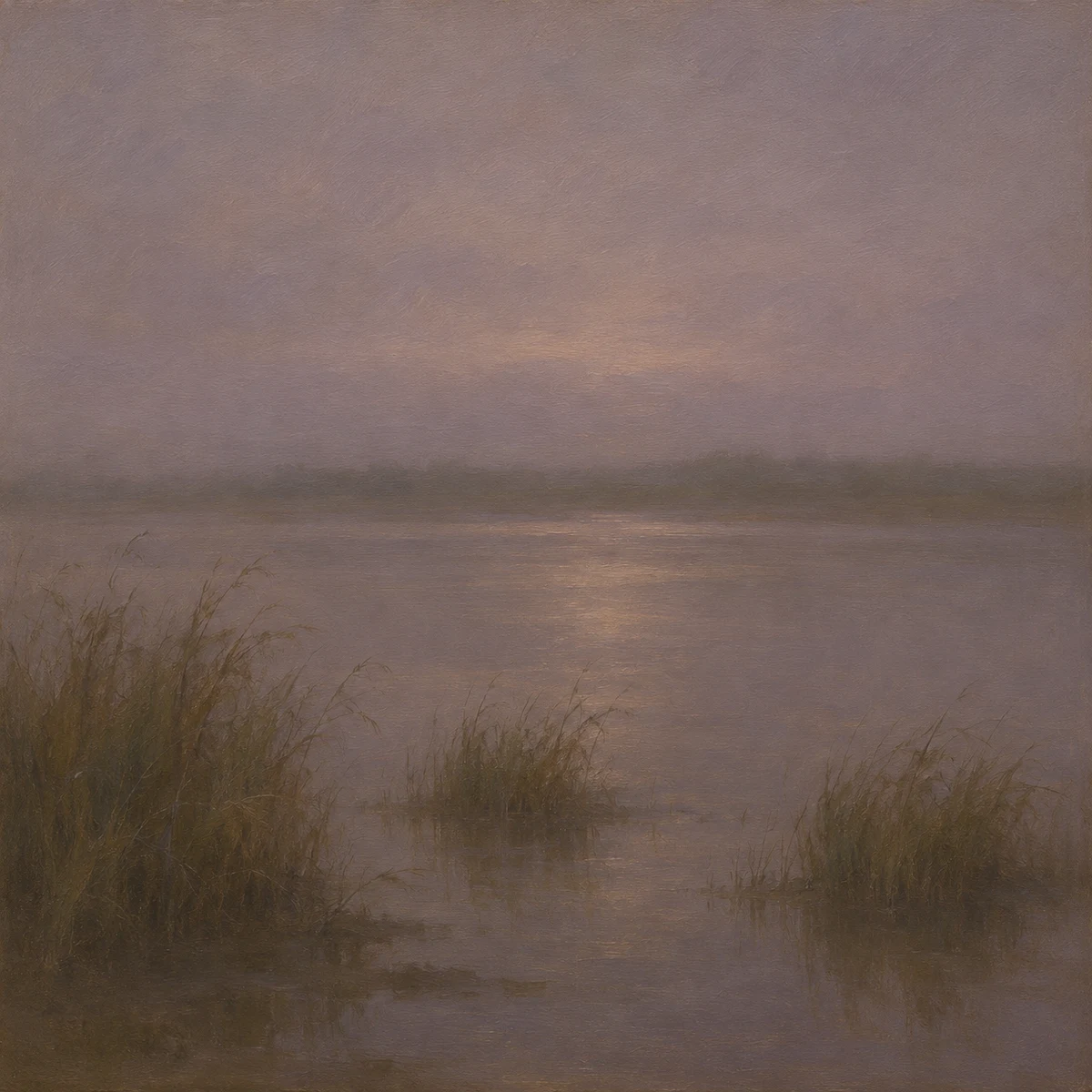
Tonalism
Muted color, a narrow value range and softly fused edges bring a painted scene into atmospheric tonal unity.
Make
Tonalist painting with a restrained low-key palette, closely related values, softly fused edges, thin scumbled surfaces and atmospheric tonal unity.
A starting point: add your own subject or details in your image tool.
Combine the reusable visual seed with your own subject.
Original AI interpretation, not a historical artwork or evidence of specialist technique. Follow the sources for documented examples.
About this aesthetic and its examples
Compare more directions
Explore other approaches for this kind of project.
Look closer: traits and nearby styles →
About this example
This image may have used extra directions. The seed above is a reusable starting point and may produce a different result.
- Created with
- image_gen__imagegen
- Model
- Not exposed by tool
- Generated
- 2026-11-08
How to use this promptRead as Markdown
Let related values hold the scene together
Tonalist painting brings a scene together through muted color, soft edges and atmosphere. The Smithsonian’s account of Charles Melville Dewey’s work offers a historical example; this generated estuary is an original interpretation.
Compare the reeds with the distant bank: the foreground is more legible, while water and sky merge through closely related values. The mood comes from those relationships rather than a dramatic sunset. Try narrowing the value range of your own subject before adding haze.
Impressionism offers a useful comparison through broken marks and changing light. Tonal unity is the emphasis here. Softness alone does not establish Tonalism, and this image does not document a historical painting or physical painting process.
Learn more: Smithsonian American Art Museum: The Close of Day
Look closer at Tonalism
Muted color, a narrow value range and softly fused edges bring a painted scene into atmospheric tonal unity.
In the original generated example: Three clumps of reeds in still estuary water beneath a subdued violet-grey dusk sky, with soft edges and muted reflections. Notice which details catch your eye before deciding whether the whole style is for you.
Explore across projects: The softer side
Ask yourself: is it the palette, the surface, the shapes, or the subject you like? Save a favorite and use the visual taste guide to find a useful next direction.